Robot perception · Human behavior · Social navigation

Sheng Qu

M.S. student, Carnegie Mellon University

I build sensing systems that measure how people actually behave in shared space, and use that data to make robots move better among us. My current work centers on a ceiling-mounted multi-LiDAR pipeline deployed in CMU's Hunt Library — a privacy-preserving, occlusion-robust instrument for capturing real-world pedestrian behavior — and on distilling vision-language-model judgments of social compliance into reward models for navigation policies. My toolkit comes from an engineering background: probabilistic modeling, optimal control, and physics-informed ML.

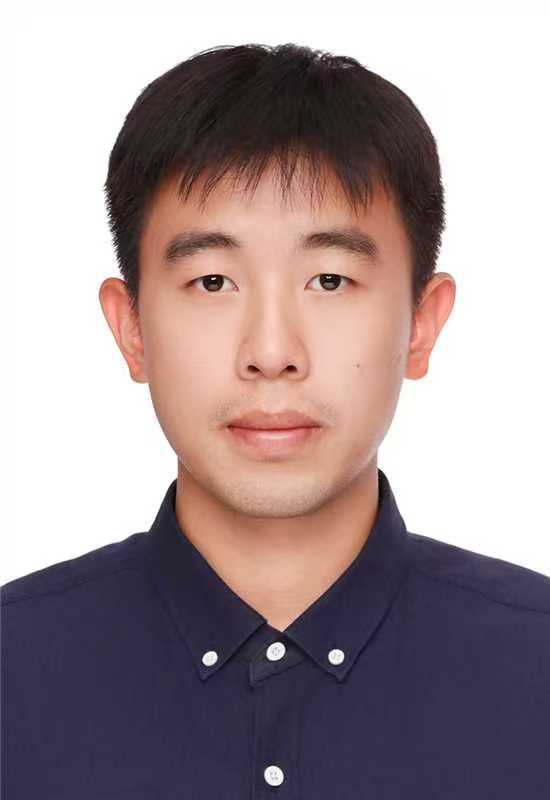
Portrait of Sheng Qu
Pittsburgh, PA · shengq@andrew.cmu.edu

Research

One thread: get real human behavior into the robot learning loop — by measuring it in the world, and by modeling it in simulation.

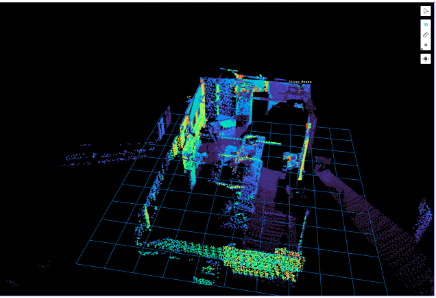
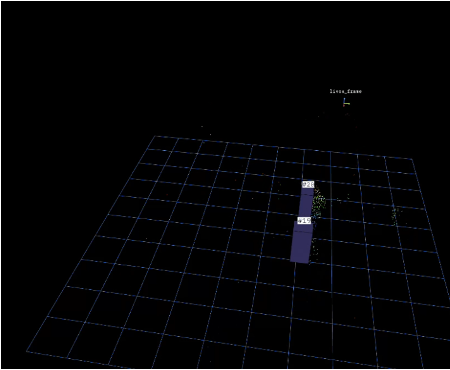
Fused dual-LiDAR point cloud of an indoor scene, colored by height Detected and tracked pedestrians shown as 3D bounding boxes on the LiDAR ground grid

Active Role — hardware bring-up & algorithm design · With — Prof. Mario Bergés, Prof. Katherine Flanigan, Kieran (PhD) · NSF SAI #2425121

Overhead LiDAR sensing of social behavior in public space

Cameras in public space raise privacy problems; ground-level sensors lose people to occlusion. Ceiling-mounted LiDAR avoids both — which makes it an unusually good instrument for collecting the real-world pedestrian behavior data that social navigation research is short on. I co-developed a full pipeline around this idea: Livox MID-360 sensors on Jetson edge nodes, dual-LiDAR fusion via ICP calibration into a common frame, statistical background removal, clustering-based person detection, AB3DMOT-style multi-object tracking, and downstream encounter detection between tracked individuals.

The fused two-node system is verified end to end; full deployment in the Hunt Library congregation area is underway (July 2026). A finding worth knowing: pretrained autonomous-driving detectors transfer poorly to overhead point-cloud distributions, which is part of why this sensing geometry remains underexplored.
Active Role — pedestrian behavior modeling & simulation realism · Team project

Socially compliant robot navigation in simulation

Ongoing team project on learning navigation policies that people would find socially acceptable. My part is the pedestrian side of the simulator: modeling personality variation, social group formations, and belief-state reasoning, so that policies train against crowds that behave like real ones — narrowing the sim-to-real gap. More details as the work matures.

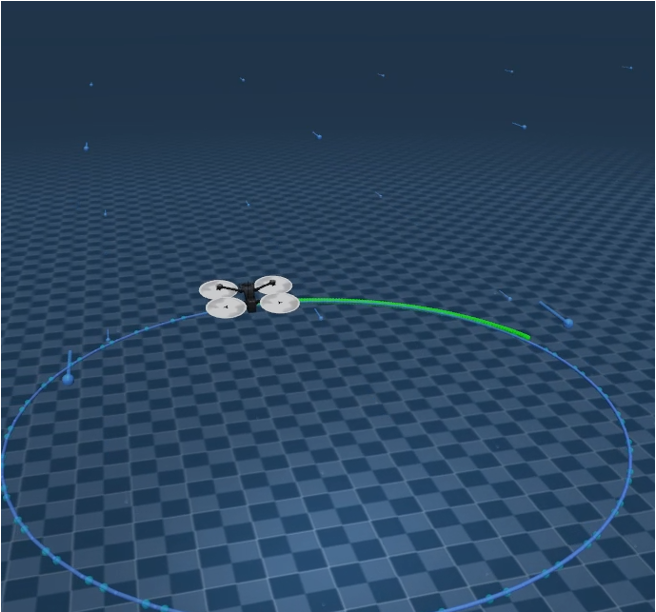
Quadrotor in MuJoCo tracking a circular reference trajectory under a visualized wind field

Solo project Role — everything: model, controller, simulation, evaluation

PINN-augmented MPPI control for quadrotors in wind

A sampling-based controller is only as good as the dynamics model it rolls out. I built a quadrotor control stack in MuJoCo that augments the nominal dynamics with a residual physics-informed neural network trained to predict aerodynamic disturbances, and feeds the learned model into GPU-parallelized MPPI. The result: precise trajectory tracking under wind fields up to 8 m/s, with motor dynamics and drag modeled, against a nominal-MPPI baseline.

Background

Engineering roots, robotics trajectory.

Education

  • Carnegie Mellon University M.S., Civil & Environmental Engineering · Dec 2026 GPA 3.91 / 4.0 · coursework concentrated in robotics & ML
  • Hohai University B.S., Environmental Science & Engineering · 2025 GPA 4.14 / 5.0
  • University of British Columbia Summer exchange, Jiangsu Provincial Scholarship GPA 93 / 100

Selected coursework — CMU

  • Computer Vision 16-720
  • Optimal Control & Reinforcement Learning 16-745
  • Physics-Informed Machine Learning12-787
  • Digital Twins & AI Predictive Analytics12-831

Fall 2026

  • Deep Reinforcement Learning & Control 10-703
  • Introduction to Robot Learning 16-831
  • Visual Learning & Recognition 16-824
  • Robot Software Introduction 16-709